
It’s easy to take a book for granted and not think about the machines and time it took to make the book, especially in the nineteenth century. The Trade Literature Collection includes catalogs for bookbinding and printing machinery. Some of those machines are shown in this 1892 Montague & Fuller trade catalog.
Year: 2016
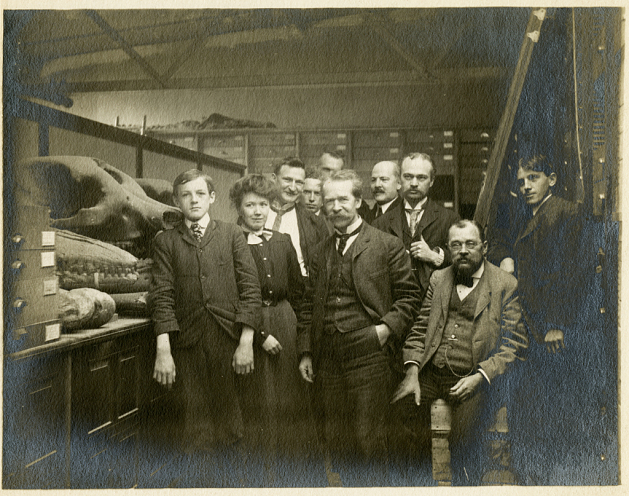
From May 13-20th, the Smithsonian Libraries is participating in the #DigIntoDyar campaign – encouraging the public to transcribe the field books of this remarkable entomologist in the Smithsonian Transcription Center and to learn more about his life and work. This post was written by Marc Epstein, Research Associate at the National Museum of Natural History and author of Moths, Myths and Mosquitos:The Eccentric Life of Harrison G. Dyar, Jr.. You can read Marc’s first post about Dyar here and second here.
Harrison Dyar’s scientific legacy has been overshadowed because he dug extensive underground labyrinths and because of his known bigamy (both explored in-depth in this Washington Post series). His family wealth allowed him to either work gratis or for a pittance at the Smithsonian from 1897-1929.
From May 13-20th, the Smithsonian Libraries is participating in the #DigIntoDyar campaign – encouraging the public to transcribe the field books of this remarkable entomologist in the Smithsonian Transcription Center more »
 From May 13-20th, the Smithsonian Libraries is participating in the #DigIntoDyar campaign – encouraging the public to transcribe the field books of this remarkable entomologist in the Smithsonian Transcription Center and to learn more about his life and work. This post was written by Marc Epstein, Research Associate at the National Museum of Natural History and author of Moths, Myths and Mosquitos:The Eccentric Life of Harrison G. Dyar, Jr.. On May 17th, you can learn more about Harrison Dyar with our Google Hangout with Marc or in person during his Smithsonian Associates lecture.
Important entomological work. The Bahá’í faith. Secret tunnels under Washington, DC. What do all of these elements have in common? Curiously, Smithsonian scientist Harrison Gray Dyar, Jr..

My salad days, when I was green in judgement
This common, if well-worn, phrase first appeared in Shakespeare’s Antony and Cleopatra of 1606. At the end of Act One of the play, recalling a youthful affair with Julius Caesar, Cleopatra refers to a time of innocence, silliness or indiscretions. Since May is National Salad Month, let us celebrate the greens by looking at the work of another Englishman, John Evelyn (1620-1706). His Acetaria: a discourse of sallets, printed in London in 1699, was the first book devoted to salads.
This post was written by Leila Prasertwaitaya, a library specialist working at Virginia Commonwealth University.
Hidden amongst the Freer | Sackler Library’s much larger collections on East Asian, South Asian and Islamic art is a small gem-like group of books on Thai art and architecture. Many of these books are in Thai, but with their magical illustrations of Dvarapala (guardians), gold-painted, bell-shaped chedi, five-headed stone nagas, a 70 cm. tall bronze Buddha head and murals of astonishing density and complexity, the books can open up a world of astounding beauty to anyone with a little curiosity.